Jim Davis
Garfield's cartoonist
US
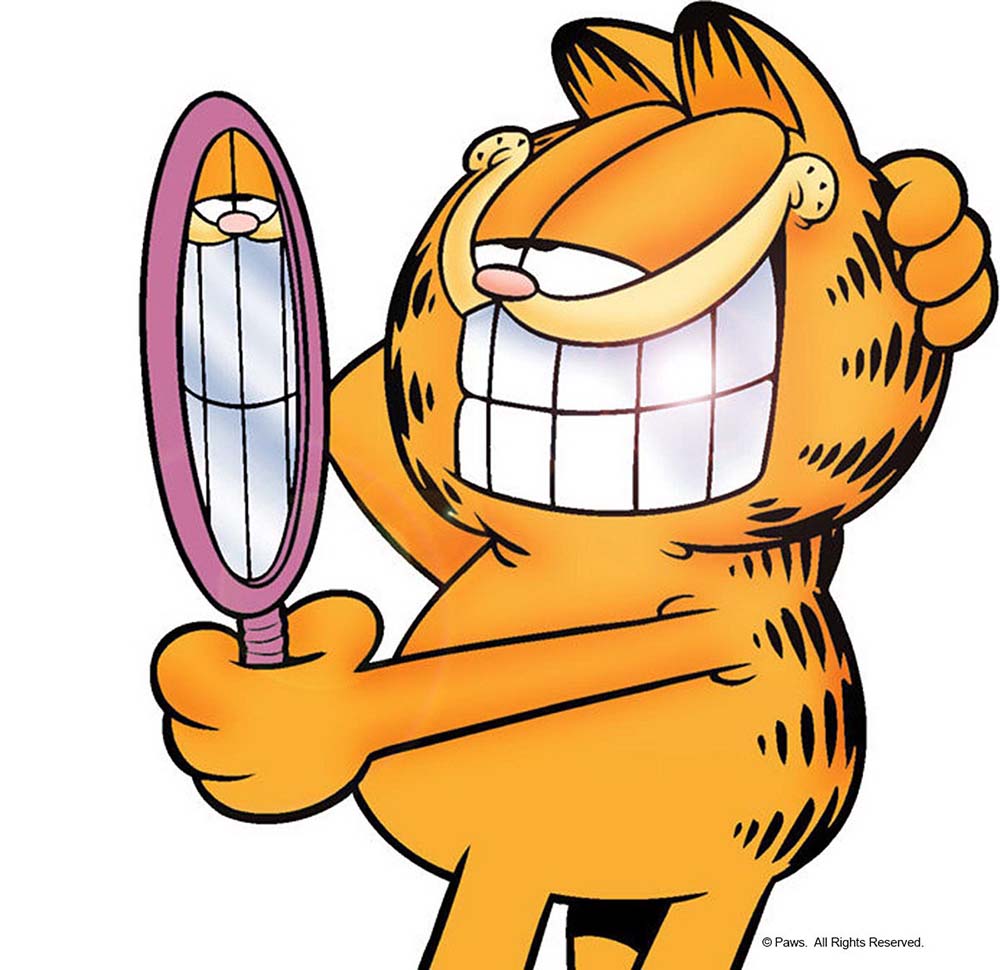
The fat, sluggish, tabby cat Garfield with his orange, black striped fur is world-famous as it is „the most widely syndicated comic strip in the world“ (in 2.100 papers in 111 countries and in 28 languages!). But the name of his creator is often only familiar to those who also read the signature on the cartoons. There it says: Jim Davis.
Jim Davis
Garfield's cartoonist
US

Cats have played a significant role in his life right from the very beginning. His parents' cattle farm in Fairmount, Indiana, where he grew up, was populated by 25 cats already. Because of his asthma, the junior (* 28 July 1945, Marion/Indiana) often had to stay in the house and thus discovered drawing for himself. After graduating from university and working in an advertising agency, he worked as an assistant to comic artist Tom K. Ryan ('Tumbleweeds'). When Davis had created a new comic character, he named him after his grandfather. The very first strip, centred on a fat, lazy and sarcastic house cat, was published in 1977, then in 41 US newspapers from 19 June 1978. In 1981, PAWS Inc. was founded, controlling the rights to Garfield and the over 3,500 products under his name. In the same year, the "National Cartoonists Society" (NCS) named Jim Davis the best comic humourist of the year - the first of many awards, the most important of which is an honorary doctorate from the university where he once studied. For his animated Garfield works, the American cartoonist received an Emmy four times, the most important television prize in the United States. Between 1988 and 1994, a total of 121 30-minute episodes of the animated series 'Garfield and his Friends' ran on television there. In 2004, 'Garfield - The Movie' was released in cinemas, followed by four more. In 2008, 'The Garfield Show' started on US TV. It is licensed in 131 countries (including daily broadcast in China). Since 1980, the New York Times bestseller list has listed a full 33 of his comic books, which have been translated into 27 languages and found over 130 million buyers. The works of the comic author, who is involved in a variety of social activities and plays golf or fishes in his spare time, are still printed in 2,570 newspapers and reach 263 million readers worldwide. Therefore it was a logical step to feature 'The Art of Jim Davis‘ Garfield' in a book of the same name (256 pages, Hermes Press).
Jim Davis is married for the second time, has three children, a cat named Nermal and the dog Pooky. He lives with them in Muncie, Indiana, on a sprawling estate that also houses his company. “The novelty’s not worn off”, Davis confessed in an interview with the British daily newspaper The Guardian on Garfield’s 40th birthday, „because I’m still trying to get it right!“
Interview May 2016
Hard work: a fat, lazy cat's road to world fame
Inspiration is the primary catalyst for being creative. What inspires you still after all these years regarding the Garfield-cartoons and which environment is best for your work process?
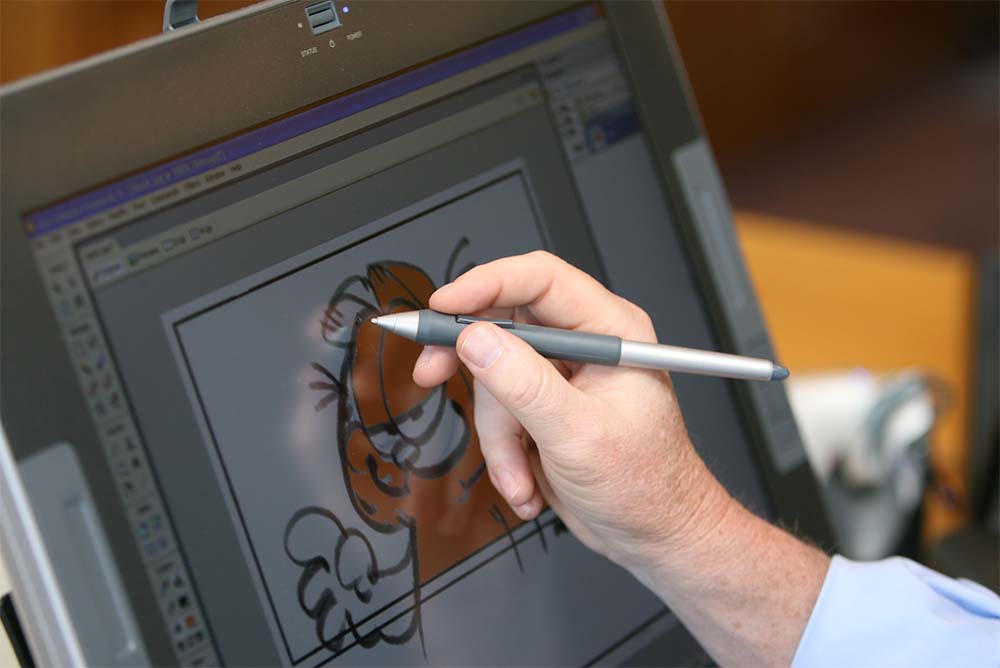
I am inspired by my children and grandchildren. Seeing the world through their eyes has given me a new perspective and I find that inspiring. Also, the older I get, the more keenly aware I am of the human condition -- there’s an abundance of material in that study. My fool proof environment involves a sunlight room, some good jazz on the sound system, and a few cups of coffee. It also helps if mundane business is taken care of before I sit down with my pencil and paper.
Garfield-cartoons are published since June, 19th, 1978. How is it possible for the creator not to repeat oneself and prevent that routine takes over creativity, but develop the character further and still receive enthusiasm?
Garfield jokes revolve around eating and sleeping. There are bound to be similarities in the gags I write, but I have a pretty good memory and I don’t think I’ve ever duplicated a gag frame-for-frame. Eating and sleeping are something we all do day-after-day. Somehow it never gets old for us -- we can jump into a meal or fall into bed with equal enthusiasm from one day to the next.
How do you stay open to critique despite success?
I developed pretty thick skin when I was trying to get syndicated back in the mid ‘70s. I received rejection letter after rejection letter. I understood a long time ago that our differences are what makes life interesting and I’ve never allowed my spirit to be crushed by a bad review. It’s one person’s opinion and they’re entitled. Ultimately, you have to like what you’re doing. Garfield still makes me laugh and I figure if he can make me laugh, he can probably have that same effect on others.
How big of a role does coincidence play when it comes to mass reception/popularity? Or: why is someone successful and someone else is not, even though they are similarly talented?
There’s some truth into the saying “timing is everything.” I launched GARFIELD when there happened to be a resurgence in the popularity of cats. TIME magazine called it the new “Cat Chic.” There seemed to be cats in books, fashion, movies, advertising. That certainly didn’t hurt in terms of building Garfield’s popularity. I believe coincidence and luck play into all our lives at certain times -- but more so, I believe that hard work pays off.
How big is your personal fear of failure, that a successful run might end all of a sudden and what follows is the fall? Would this be a matter of the change of contemporary taste and different times then or is it just a natural development that once one is on top for some time, there’s only one way - down?
I’m an optimist. Garfield’s been around for 37 years. I don’t think he’s going anywhere. Having said that, early in Garfield’s beginnings, the Chicago Sun Times cancelled the strip after they’d be carrying it for about a year. I thought that was the end for Garfield. But, the Sun Times received about 1300 calls and complaints from readers demanding it be reinstated and it was. The story helped build momentum for the sales people at the syndicate. It turned out to be a blessing. But, the licensing business is cyclical, so you do have to ride the waves of popularity. Licensing is very much about the latest “big thing.” You can’t always be the latest hit -- you just have to keep plugging away, staying true to the character, trying new things, embracing new technology, finding new audiences.
MY FAVORITE WORK