Be Another Lab
interdisciplinary art-science research laboratory
Spain
„If you could see it through my eyes...“. This wish crosses every human being’s mind from time to time. The phrase‘s sentiment is a recurring theme in literature ('A Streetcar Named Desire' by Tennessee Williams), movies ('Blade Runner') and music ('Wish You Were Here' - Pink Floyd, 'Angie' - The Rolling Stones). What was a dream come true for eternal times, has become reality in the first quarter of the 21st century. A multinational association working at the intersection of art, science and technology has developed a virtual reality machine to experience what it would be like to live in the skin of someone else. The revolutionary innovation has received many awards including „First prize on solving the world’s major challenges“ by Network for innovation in Culture and Creativity in Europe and got international media coverage by The New York Times, The BBC, Le Monde (France) or El Pais (Spain). At its beginning there was a simple, momentous question: „What would the world be like if we could see it through the eyes of others?“
Be Another Lab
interdisciplinary art-science research laboratory
Spain
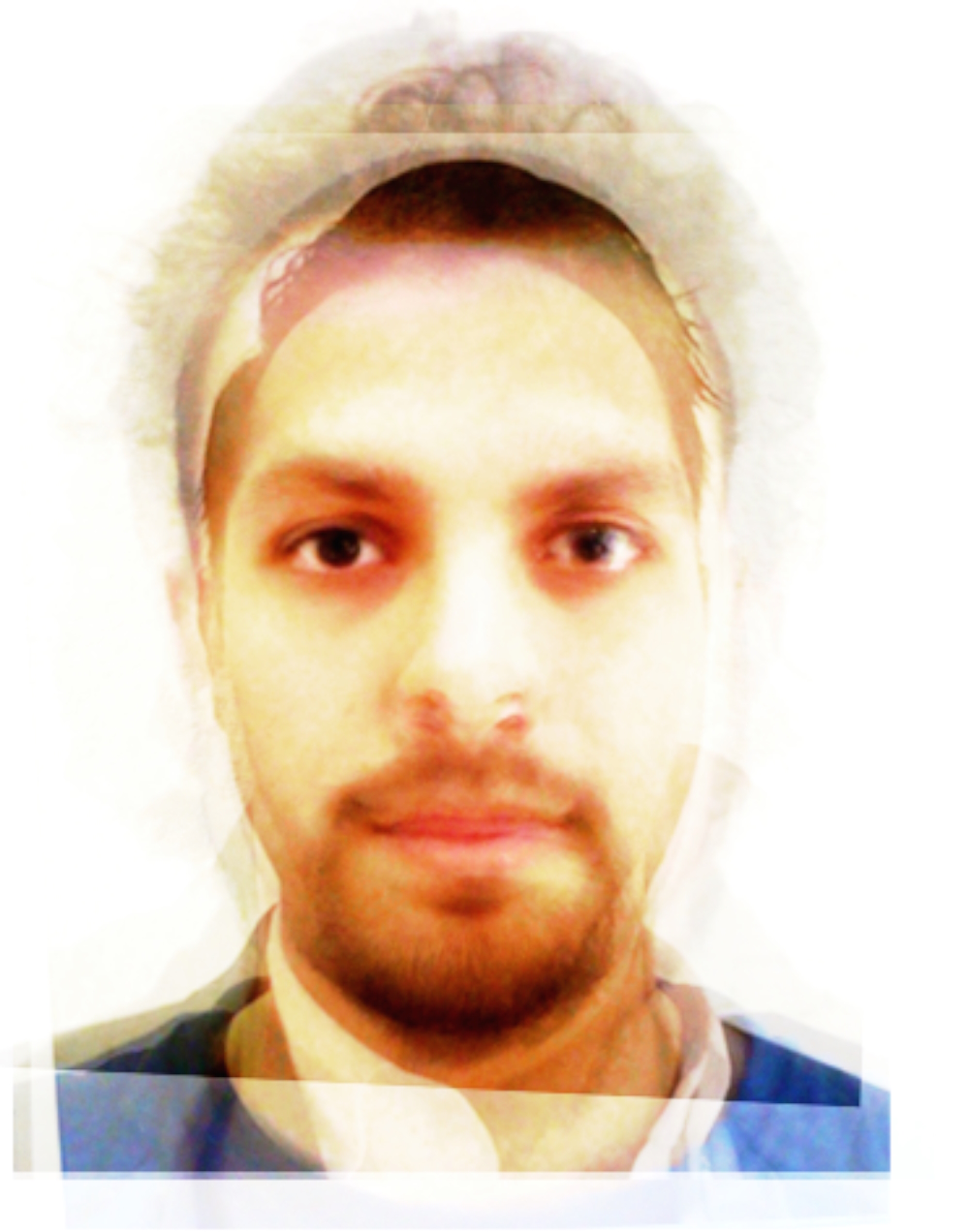
Just imagine: swapping your gender, be it from female to male or vice versa, for the feeling of having a body of the opposite sex. Therapists and doctors stepping into their patients‘ shoes for a better understanding what it’s like to be disabled or suffer from eating disorder. A third example: wheelchair users literally embedded in the skin of dancers immerse the feeling of movement without restrictions. These are just a few of many possibilies that this special software offers in conjunction with a pair of virtual reality headsets including a camera.
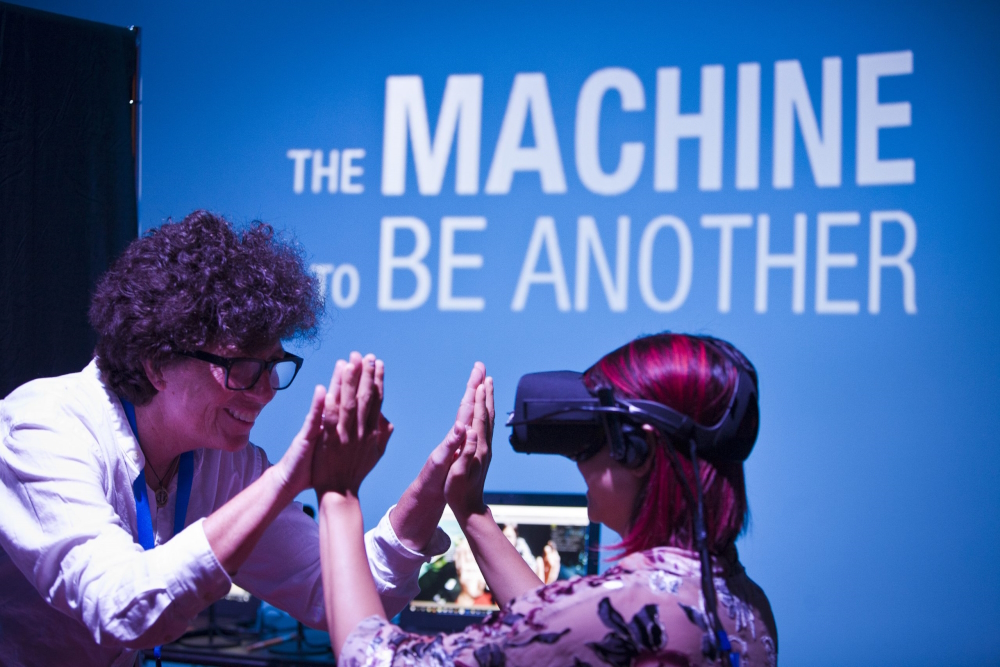
The network was created by the appropriately named BeAnotherLab and founded in 2012. It comprises an international team of researchers with expertise in the arts and sciences, ranging from cognitive science and psychology, interactive systems design, digital arts, computer science, social- and cultural anthropology to cultural management, philosphy and conflict resolution. According to its selfdescription the „interdisciplinary art-science research laboratory is dedicated to exploring the relationship between identity and empathy. We develope immersive technology systems to generate new modes of storytelling and to experiment with the perception of self and other.“ For doing so they‘ve built a tool called ‚The Machine‘. It is „an open source system which uses a head-mounted display to transmit video from one person’s perspective to another“ (Wikipedia) to create performance-experiments related to the understanding of the other and the self.
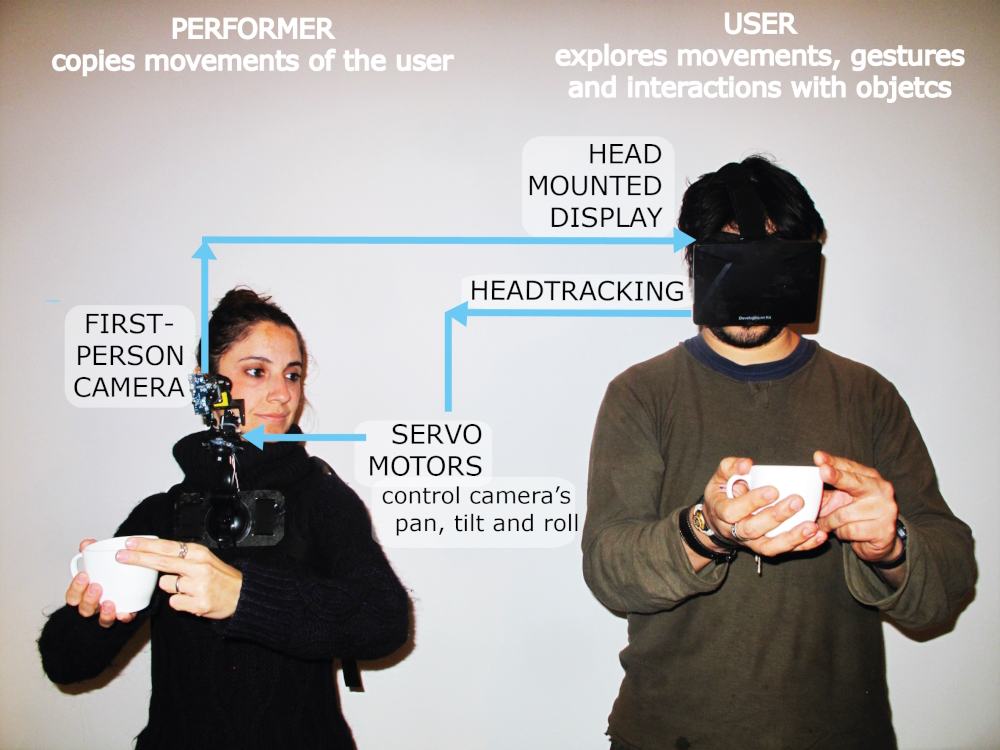
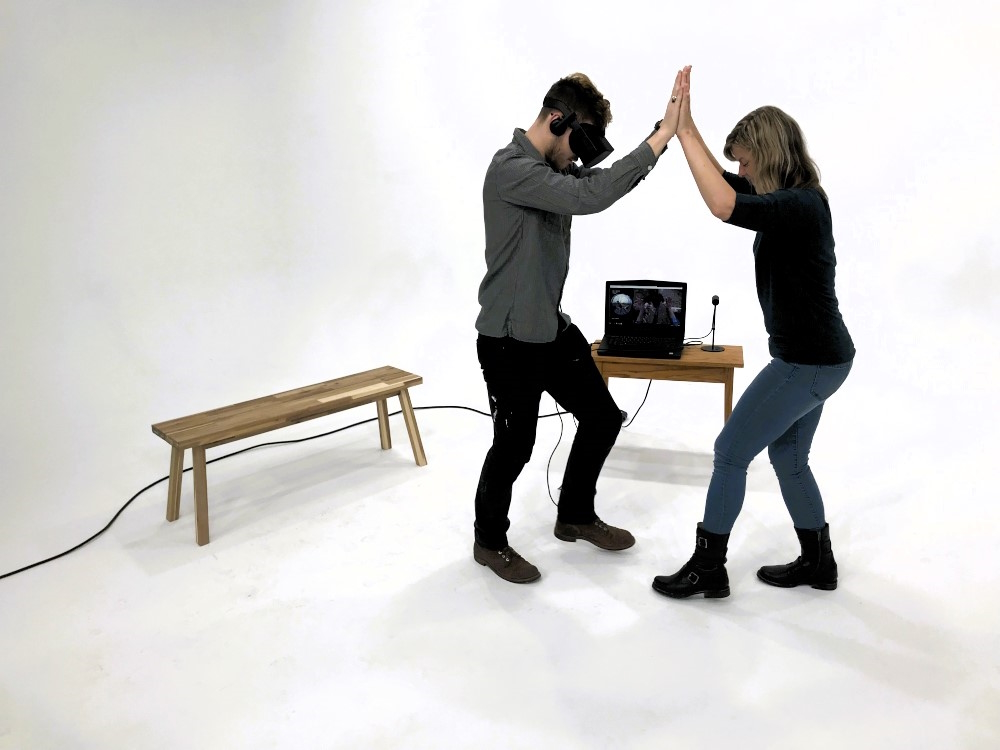
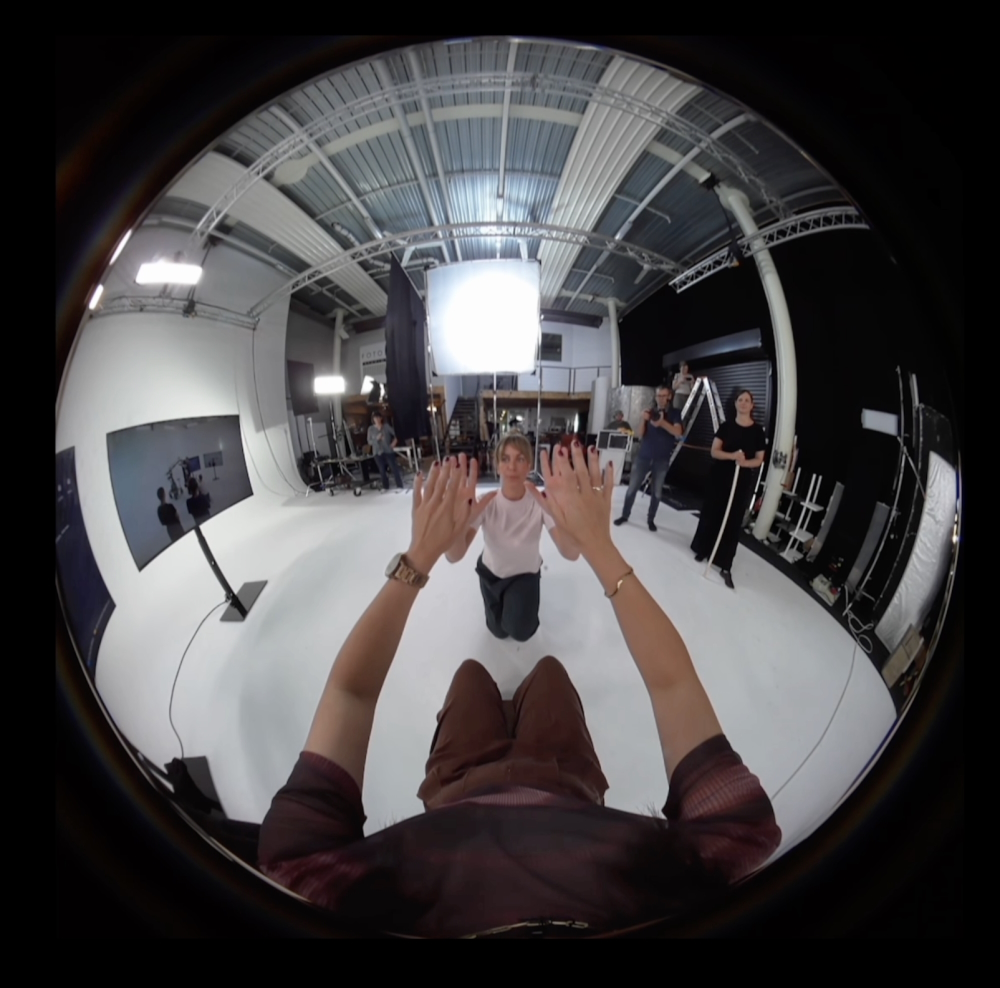
‚The Machine To Be Another - Classic‘ is the name of the prototype from 2012. It combines software, hardware and virtual embodiment („examines how the form of the body affects the way we think and act“, dezeen.com). BBC.com describes how it works: „The system is relatively simple. Both users wear Oculus Rift virtual reality headsets with a camera mounted on top. The video from each camera is transmitted to the other person, so what one sees is the exact view of their partner. If you move your arm, they see it. If one moves their arm, the other sees it.
To get used to seeing another person's body without actually controlling it, participants start by moving their arms and legs very slowly so that the other person can follow. Over time, this type of slow, synchronised movement becomes comfortable, and participants really begin to feel as if they are living in another person's body.“
‚The Autonomous Machine“ dates to 2020 and is the further developement of its predecessor. „The system enables two persons to swap their bodies with each other in real-time. It functions without the two assistants guiding and facilitating the experience for users. Participants are on their own, The Autonomous Machine becomes the facilitator“ (BeAnotherLab-website).
One of multiple applications for both systems is called ‚Embodied Narratives‘. „In this setup, a storyteller swaps bodies with a user, while listening to the storyteller’s pre-recorded narration, often a personal experience the storyteller wants to share“ (BeAnotherLab-website).
People who have tested a version of ‚The Machine‘ sensed it as overwhelming. „Virtual reality made me believe I was someone else,“ stated the author of the American technology news website The Verge. And in The New York Times there was this headline to be read: „We Are Merging With Robots. That’s a Good Thing“ followed by these lines: „The old boundaries of the human self are being blurred by technology. The risks are real, but the potential is astounding.“
„Interestingly, the use of this technology promises to alter people's behaviour, potentially for the better“, is to read on BBC.com. „Studies have shown that virtual reality can be effective in combating implicit racism, the inherent prejudice that humans have against those who do not look or sound like them.“ That‘s entirely in line with the inventor's intentions. BeAnotherLab „was created as a tool to promote debate and social dialogue, now we are now adapting it as an instrument for neuroscience experiments, to create and measure social empathy“, BeAnotherLab’s Philippe Bertrand told Spain’s biggest daily newspaper El Pais.
The horizon of their researchs might reveal further perspectives in the future – some might occure because collaborations with various partners like the integrated dance collective Liant La Troca. However, its basic everlasting, important approach will remain the same: promote empathy among individuals of different social, cultural and ideological contexts!
The core of the non-profit organisation BeAnotherLab consists of four people. They work at a studio in Espronceda Art Space, the Institute of Art & Culture, based in their habitat of Barcelona, Spain.
Interview November 2025
Solving the world’s major challenges: experiencing life from another person’s perspective
INTUITION/IMAGINATION
?: How does intuition present itself to you – in form of a suspicious impression, a spontaneous visualisation or whatever - maybe in dreams?
I would say a suspicious impression - the sensation something is odd or wrong with a situation which drives a need for inquiry.
But I think this is something deeply personal and putting it into words almost defies the idea of it being an intuition. What is remarkable is that intuitions have such a great impact in our lives and that in a team we might have joint intuitions despite their forms potentially being quite different.
?: Will any ideas be written down immediately and archived?
We used to be very diligent taking notes of all our important creative or strategic meetings. Now it seems we’ve come to the realization that they come through conversations primarily, and if they stick we are more likely to end up implementing them
It has been a challenge to be welcoming of new ideas while also acknowledging both our (in)capacity to deploy as well as the fact that not all the ideas fit our shared view. Feeling that one’s ideas are welcomed in a group is important to foster a sense of individual agency, and it’s a challenge to sustain this while maintaining a common view. It is strangely easier to welcome and deploy new ideas while co-designing with external people than we are within our team.
?: How do you come up with good or extraordinary ideas?
Experimenting and meeting with other people has been a driving force that led us to work together towards a common goal. The beauty of our work is that it provides a methodology that allows for new ideas, where others expand the palette of what’s possible with our approach. It provides new ways of imagining, experiencing, and sharing. However, one thing is clear, simple is better. Our initial prototypes were extremely complicated and with time simplicity has paid off.
?: Do you feel that new creative ideas come as a whole or do you get like a little seed of inspiration that evolves into something else and has to be realized by endless trials and errors in form of constant developments until the final result?
Creative ideas definitely come from adding an extra layer of experimentation to already existing idea. Or taking something from one context and applying it as it is in a different context, which helps with shifting the understanding we had of it.
?: What if there is a deadline, but no intuition? Does the first fuel the latter maybe?
It forces us to finish whatever we’re working on, but the result is more likely to be a very early work-in-progress prototype rather than something that gets really refined for a specific deadline. Thankfully, in our team we don’t consider having a final work, it’s always an iteration that depends on the context, technologies, and most importantly on the people involved.
INSPIRATION
?: What inspires you and how do you stimulate this special form of imaginativeness?
Other peoples’ experiences are definitely a big driving force. Immersing yourself in one’s unique stories and how they interact with a shared context creates tensions that drive imagination (what would I feel if it happened to me?)
?: How do you filter between ideas that are worthwhile pursuing and bad ones that you just let go of?
The bad ones usually die of by themselves by a lack of common energy behind it. No matter how good or how enthusiastic some members of the team might have been about it in the first place. Sometimes we just don’t have the resources to pursue ideas that might be worthwhile or that might be outside the scope of our collective vision. But our team members have pursued their own related works on their own quite successfully, from the arts, to science and commercial ventures. While at first we were a bit cautious of this, now we consider it an ideal approach to foster freedom and creativity that also positively feeds back to our collective.
?: Does an idea need to appeal to you primarily or is its commercial potential an essential factor?
We are really driven by the multiplicative power of ideas I think. Practicality is not really our strongest. Financial gain, though important for sustainability, was agreed early on to not be our driving force.
?: Do you revisit old ideas or check what colleagues or competitors are up to at times?
Yes. There has definitely been some fear of missing out over the years but I think we’ve come to be more and more confident in the special uniqueness of our work. A lot of it comes down to the difficulty of turning it into a commercial product and the unusual labor intensity of the work, especially for a new media piece.
CREATIVITY
?: What time or environment best suits your creative work process — for example, a time and place of tranquility or of pressure?
Creativity for us conveys a feeling of messy and elated, mind-bending excitement that usually happens in a collective space - That’s what the early days of 'The machine to Be Another' were like. Pressure usually leads to arguments, but in a way arguments help solidify what won’t be pursued.
Things have also changed over time. The early excitement when we began was very compatible with pressure, and pressure itself allowed us to deploy new things. Nowadays, that pressure has become unsustainable.
?: What’s better in the realization process — for example, speed and forcing creativity by grasping the magic of the moment or a slow, ripening process for implementation and elaboration?
It’s been progressive and has slowed down over the years. However the benefit of that slowness has been that it added depth to the work because despite how easy it is to replicate it is still a very rare and unique experience.
?: How important are self-doubt and criticism by others during such a process?
It has been a constant in the early phases of the project, and it has manifested in prismatic diversity. Some felt proud of the messiness of our organic functioning while others felt embarrassed. Some of us felt more entitled while some felt like impostors. Impostor syndrome was strong and amplified by the chaotic dynamics of a collective in formation. It probably hasn’t helped much the process. Only by gaining experience we managed to shut down this constant self-deprecation. By now our organic and messy functioning is more acknowledged as part of our identity.
?: Is it better to be creative on your own, to trust only your own instincts, or to work in a team?
We only work as a team.
?: In case of a creative block or, worse, a real failure, how do you get out of such a hole?
We thrive by interacting with others, and positive reinforcement from outsiders or participants has been a big boost. We also trust that rather than madly attempting to create senseless innovations, sustaining meaningful works and engagement are much more powerful despite not getting as much visibility.
?: Should a creative person always stay true to him- or herself, including taking risks and going against the flow, or must the person, for reasons of commercial survival, make concessions to the demands of the market, the wishes of clients and the audience’s expectations?
Yes, as individuals we all had to find money through other means, commercial or academic and so on, to survive, but as a collective we haven’t been very successful pursuing commercial ends, it tends to interfere with our internal dynamics too much. The horizontality of the collective works as a sort of immune system against those kinds of things, but simultaneously it resulted in a degree of precarity.
?: How are innovation and improvement possible if you’ve established a distinctive style? Is it good to be ahead of your time, even if you hazard not being understood?
We were at the right place at the right time, and we rode the zeitgeist for a decade. It has been very helpful. Now VR is definitely going through a process of disillusionment. I don’t think we were too ahead, just the right amount. It doesn’t serve anybody to be right too early, quite the contrary. You just have to wait for the right moment. Fortunately from the beginning we managed not to get too caught-up in the zeitgeist, now times are more uncertain, but our uniqueness stuck and is becoming more and more salient.
So in a way, “our” idea has always been there and might always be, we just pursued it and were lucky to gain some visibility.
?: When does the time come to end the creative process, to be content and set the final result free? Or is it always a work-in-progress, with an endless possibility of improvement?
It is always a work in progress, whether it is seen as a separate thing from the previous or not. We are also thinking a lot about the value of timeless works of art, and of the difficulty of the conservation of digital artworks for the future. The open-source approach definitely helps with that, as does the obsolescence of digital devices. We want our work to be replicated indefinitely in the future with whatever tools are available then.
?: How does artificial intelligence change human creativity? And do you? Would will you use it at all?
We don’t really use it but we are following it closely while being fascinated and worried by it at the same time. We might use it some day, the question we haven’t answered yet is “how”. We find it quite tricky to not get caught up in the “not-human” aspects of it.
SUCCESS
“Success is the ability to go from one failure to another with no loss of enthusiasm.” Do you agree with Winston Churchill‘s quote?
Yes, I would say that summarizes our evolution quite well.
?: Should or can you resist the temptation to recycle a ‘formula’ you're successful with?
No, especially if that formula still delivers in a way that is not understood by most nowadays. We are still amazed by the unpredictable reactions to our work. If we have a formula at all it is not to create ourselves but it is a methodology where others might feel welcome to do so.
?: Is it desirable to create an ultimate or timeless work? Doesn’t “top of the ladder” bring up the question, “What’s next?” — that is, isn’t such a personal peak “the end”?
Yes, we talked about timelessness earlier. It certainly feels like we won’t progress further than what we have so far. So “What’s next” has been a question we were asked a lot and got us uncomfortable at times because it creates an expectation and a lot of pressure. We ended up getting more comfortable with the idea of “that’s it” (which means more of the same) because our work revolves around the encounter with the other, it means there is always something new that emerges from that encounter. And that’s quite magical.
With our more recent works like the 'Library of Ourselves', there is always a next story, a next person with something powerful to share, and hopefully someone to listen with an open heart.
MY FAVOURITE WORK:
The 'Machine to be Another' is our claim to fame. After all these years it still feels relevant and fresh. It never feels like a repetition of something that’s passed, if anything it feels more relevant than ever. The hardware and/or protocols have hardly evolved. There is something unique and otherworldly to the experience that makes it stick with people. On numerous occasions we ended up being contacted for new opportunities by people that had experienced it several years before and stated it had changed their life. We feel it’s our duty to be able to respond to the desire that emerges from that encounter with the other. It is a thing that only exists if there are people willing to participate in it.